More About Wire

Wire is an integral component to jewelry. Whether you’re wire-wrapping, creating coils, weaving or any other technique, the right wire choice will make your life easier. But, how do you know which wire to choose? Learn about how hardness, gauge and more can affect your end result.

Hardness

Dead-soft means it’s easy to bend and can be manipulated easily without tools. That’s it. These metals do not form hard or shape angles and will not hold shape well. It is good though for wire weaving, coils and spirals or wrapping around a harder base. This wire can be work harden, but if using coils, only the outer part will become hard, the inside of the coils will remain soft. Aluminum will always remain soft.

Full-hard is the exact opposite of dead-soft. This wire is difficult to bend and can be a bit brittle if bent too far. Full-hard wire retains its shape exceptionally well. Full-hard metal wire or sheet is often used as a frame or base. It is possible to soften full-hard metal by the process of annealing. 

Half-hard is the sweet spot between the previous two tempers. This wire is fairly easy to bend, but it will retain its shape afterward. This particular hardness is the most commonly used wire for wire-wrapping, earwires, jumprings and hard angles. Half-hard metals can be made softer or work hardened to a full-hard temper.

Softest to hardest:
Dead-soft
Fine silver
Copper
Rich low brass
Gold-filled Sterling silver
14Kt yellow gold
Softest to hardest: Half-hard
Fine silver
Copper
Sterling silver
Rich low brass
Gold-filled 14Kt yellow gold
Softest to hardest: Full-hard
Fine silver
Copper
Sterling silver
Rich low brass
Gold-filled 14Kt yellow gold
I mentioned work hardening But what does it really mean? As you work with metal, the more you manipulate it, the more rigid it will become. This process results in work hardening. On a more scientific level, you have moved the metal’s molecules closer together. It is best to work harden as much as possible before shaping, since it can become increasingly difficult to work harden after your piece is finished. While working on your piece, check the hardness often so your metal doesn’t become too brittle and break.Ways to specifically work harden include
Pulling wire straight with nylon-jaw pliers or polishing cloth
Tumbling with steel shot
Hammer with a rubber mallet or jewelry
hammer on a steel block
Twisting
Coiling and uncoiling
Pulling through draw plates

To soften up metal, you loosen the molecules up through the process of annealing. annealing is a process of heating and cooling resulting in more flexible wire. When annealing, metal oxidizes extremely quickly and a pickling solution is used to clean the metal to pristine quality again.

Extra Fun Things

One item that you should add to your work item is a Kumihimo disk. This can be used to help with wire weaving beautiful designs and even adding beads to the designs. I have used it to make beautiful bracelets and even necklaces that stand out for the unique weave that I have done. You can use both the round and the square one for designs

I had mentioned the Coiling gizmo before, Not only can you make beautiful coils that you can use in your jewelry. but with the wig jig you can also make symmetrical coils and earrings. Both add an interesting flair to your work.

Amazon.com: The Beadsmith, Wig Jig, Wig-A-Ma-Jig Beginner kit, Includes 3 x  4 inch Clear Plastic jig, Includes Plastic pegs and 2 Yards of Copper,  Silver and Gold Craft Wire

when you are making a piece of jewelry, you want it to stand out from everyone else. The best way to do this is to use your imagination to bring the piece to life. Nothing is to scary to try and you might actually find that you have a way with the wire.

Wire and Gemstones

Lets talk about the type of wire that you will be using. Wire is listed by gauge. Gauge tells you what size the wire is. The larger the gauge size, the smaller the wire.

Halstead Jewelry Blog | Wedding jewellery inspiration, Bead size chart,  Delicate jewelry necklace

You can use any wire, but I recommend starting with non-tarnishing wire. Other wire is copper, silver, brass etc. These can also be found in the non-tarnishing wires. Most projects will use 18-28 gauge wire.

There are many stones that you can use. Gemstone beads are wonderful to use because you can run the wire through them.

Gemstone Beads

Cabochons – come in all sizes and shapes, Some are are harder to wire wrap, but lend themselves to interesting designs. Cabochons can be made from different materials, from resin to actual gemstones to crystals. I love working with the actual gemstones. but the others lend themselves to great designs.

10 cabochon pkg

If you plan on making pendants, you should have some type of cord to use. You can find many different types from leather to chain to silk yarn. you can also find many of these already with a clasp attachment, which makes it super easy.

the best place to find these items are at the bigger jewelry shops, such as Shipwreck Beads https://www.shipwreckbeads.com and Fire Mountain Gems https://www.firemountaingems.com.

How to Get Started Making Wire Jewelry

So you want to learn how to make wire Jewelry? To do that you will need to get the proper tools and wire.

I have made a list of the tools that you will need and have broken it down into two groups. Essential Tools and Would like to have tools.

The basic essential tools that I recommend:

1. Wire cutters,— Flush cutter which is very useful to make your own jump rings. Xuron cutters are the best.

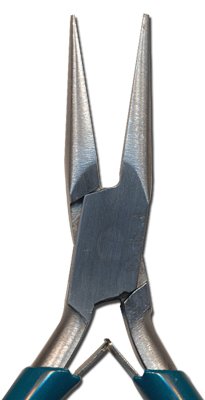
2. Chain Nose pliers—each jaw is flat on the inside and rounded on the outside on these types of jewelry pliers. The flat side is for gripping small parts (headpins, earwires, jump rings…etc). They are used to manipulate small items and to make 90 degree bends in the wire. With two pairs of pliers, you can easily twist jump rings apart and closed again for basic assembly work.

Chain nose jewelry pliers

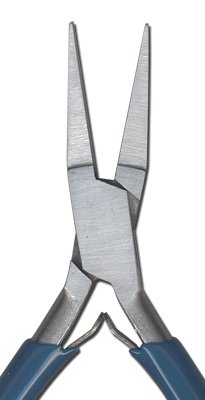
3. Flat Nose pliers—have a wider nose that is shaped like a duckbill instead of a narrow tip. Flat nose pliers are usually 3mm-5mm wide for a firm grip or straightening metal strips, plus you can use them for creating sharp bends in your jewelry designs too!

Flat nose metalsmith pliers

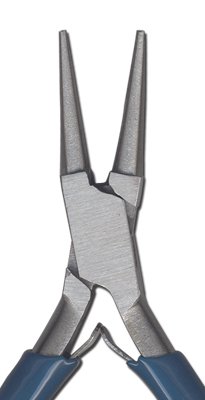
4. Round Nose pliers— the jaws on these pliers are conical or rounded all the way around making them difficult to grip with but perfect for creating loops. Use caution when gripping and refrain from too much force to avoid denting metal parts.

Round nose jewelry making pliers

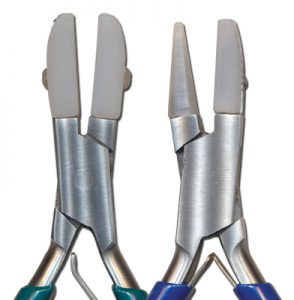
5. Nylon pliers- These are different than standard pliers, as the heads are made of nylon. and come in different shapes. They are primarily used for straightening or flattening the wire ( smooth out the kinks). You are also able to make spirals without damaging the wire.

Nylon jaw pliers for jewelry

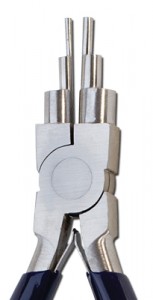
6. Barrel pliers—- ( bail making pliers) They make different size loops with the wire. can also be used to make jump rings.

Looping pliers for jewelry wire

7. Ruler. For measuring the length of the wire that you need to use. also for measuring the cord for a necklace if you are making your own.

8. A sharpie pen- for marking the wire when measuring for wire wrapping.

Other tools that I have and use :

Files- for removing sharp edges on the wire

Beadaholique Branded Needle Files, Grey

Chasing Hammer- Has two sides, a flat side to flatten out wire or other metal, and a textured side to add texture to flat metal.

Texturing Hammer with 9 Faces | HAM-470.00

Anvil— to use with the hammer to add texture or flatten the wire. You do not need a large one ( Mini Anvil Bench)

Heavy duty wire cutter, for cutting wire that is 20 gauge or smaller.

Coiling Gizmo- Helps to make identical coils for earrings or other components Wire Coils

Rubber mallet– nice to have on hand if you want to hammer the wire without leaving marks.

Many of these can be found at your local hobby store, such as Michaels, Jo-Anns, Hobby Lobby or on Amazon. Other places to look for them would be Fire Mountain Gems https://www.firemountaingems.com/ or ShipWreck Beads https://www.shipwreckbeads.com/.